The root of our objections to the complete and total grace of God (re-post)

_

A couple of times during the class Pastor Mark asked the question, “You still want to be a Lutheran?”

_

_

click >The root of the Old Adam’s resistance to unconditional grace

_____________________________________________________________ 
Thanks for the class, Pastor Mark.

And thanks to flickr and Michelle.oliveira82, for the photo.


_

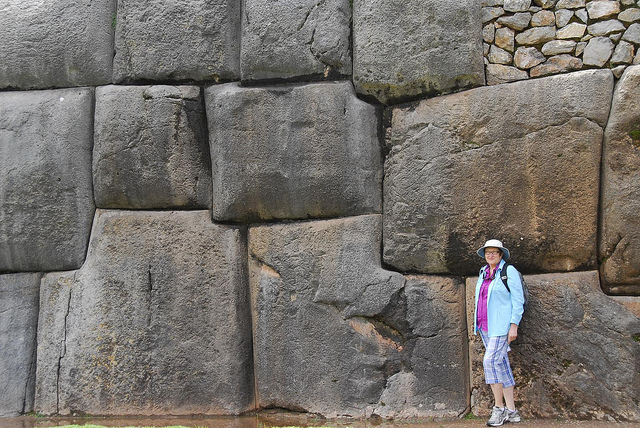
A Stone large enough to carry all the weight.


Can we figure it out? Can we handle the burdens?

Listen to Pastor Mark’s sermon for the 8th Sunday after Pentecost:

_

 click > Can we handle this world and our lives?

__________________________________________

_

Thank you, Pastor Mark. 

_

And thanks to flickr and birder_bob, for the photo.


_

Two different streams of Christianity. Presented and compared below.

I posted this one several years ago. But it’s time to hear it again. Plus, there are a lot of visitors here who are fairly new and I’d like them to hear this. If they will. 

_

Listen in >   The Two Christian Paradigms

    (the story of Jesus and Nicodemus)  

_

_________________________________________________________________

_

Thanks, Pastor Mark.

_

And thanks to flickr and tomfinken, for the photo.

_

Why did Jesus make so much wine? (180 gallons)


Wasn’t that going just a bit too far?  Would not 20, or 30, or 50 gallons have been sufficient?

Listen in and get Pastor Mark’s take on the question:

_

click > Why so much wine? ( 180 gallons)

_

_______________________________________________________________________________________________

Thank you, Pastor Mark.

_

And thanks to flickr and Emmasin, for the photo.


_

_

1 Minute Daily Word.com

_

My goal is to get up in the neighborhood of 4 million hits a day on

 http://1minutedailyword.com/ 

_

Pastor Mark  (it’s a mirror blog of his blog – link on site)  isn’t into numbers, and rightfully so, but I’d like to get 4 million people a day to read these Christ-centered daily devotionals, because the gospel is there. Christ is there.  And where the gospel is, faith can be born… or kept burning.

We are ‘well’ short of a million hits a day.  But we’re going to keep them coming as long as Pastor Mark will write them, and there are ears to hear (eyes to read).   More people are learning about them everyday.

So, send them to friends and family…and even the occasional enemy. And keep Romans 1:16 close to heart.

_

Thanks, and God bless you.

_

____________________________________________

_

Thank you to Chris Yarzab, for his great photo.

_

_

Born-Againism


“Prostrating himself and touching his forehead to the ground, Mathieu Pawlak put his demons to rest. Once a practicing Catholic tormented by a spiritual void and the searching questions of youth, Pawlak embraced Islam and, he says, found peace…. “I found the way that Muslims pray to be truly profound.  It links the body and the heart,” said Pawlak (New York Times, 1/16/06, “Officials concerned about Muslim converts,” emphasis added).

  1. Scripture references:
  2. John 3:3:         “born again” – the Greek means “born anew” and “born from above”
  3. John 3:5:         water and Spirit (= the Word, that is, Christ)
  4. John 6:44:        “No one can come to me unless the Father who sent me draws him…”
  5. John 15:16:      “You did not choose me, but I chose you…”

NB! Therefore when all these texts are examined, it is evident that John 3:3 “born anew” means “born from above.”

Acts 16:15:  “[Lydia] was baptized with her household…”  Household = men, women, children, and slaves.  Up until 140 AD there is no reference to infant baptism or adult baptism of those from Christian families.

Infant baptism = the perfect example of justification by faith alone

Adult baptism is deferred infant baptism.

  1. What is really real?  Experience?  Feelings?  Experiences fade away.  Feelings come and go.  Some never have spiritual experiences.  Furthermore “…even Satan disguises himself as an angel of light” (2 Cor 11:14).  “But even if we, or an angel from heaven, should preach to you a gospel contrary to that which we preached to you, let him be accursed” (Gal 1:8).
  1. What is sin?  Spiritual pride, rebellion.  (“All our righteous deeds are filthy rags,” Is 64:6)
  2. Pride – If I do or feel the “right thing,” I am caught in spiritual pride.  I’ve done it right.  I’ve contributed my share.
  3. Despair – How to know when I’ve believed earnestly enough?  Has my decision for Christ been heartfelt?  Has it stuck?
  1. The appeal of visible success.  5-7 hundred million Pentacostals.  They seek evidence of changed lives = quest for visible transformation.  They appeal to experience.  They advocate small groups, and small groups work.  Speaking in tongues is found in Hinduism, too.  Spiritual experiences are not confined to Christianity (matters of psychology/sociology).  They are separate from “the truth of the gospel.”
  1. Discipleship: “They’ll know you are Christians by your love” (!?)  We have to make it happen.  And we can make it happen.  Claim that evidence of faith can be provided.

Luther’s rediscovery of the gospel:  We are totally righteous and totally sinful.  Faith, by definition, is hidden, hidden under the cross.  What’s real?  The promises of God – outside of us, in spite of us.

“One thing is sure: We cannot pin our hope on anything that we are, think, say, or do.”

(Martin Luther, Smalcald Articles III/III/36, BC 309)

_____________________________________________________________________________________________________________

 – Thanks to flickr and to buzzwordindia2010, for the photo.  And thanks to CrossAlone Lutheran District for the  content of this post.    

_         

“My Grace is Sufficient”


Listen to sermon>  01-track-01

__________________________________________________________________

I have a new computer and don’t know how to use it, yet. I can’t upload audio files like I used to, using my new Mac.

Please be patient with me and hopefully I’ll learn.

Let me know if you’re able to hear the sermon on SoundCloud.  I uploaded it there, but was not able (for some reason) to listen to it.  Sheesh.

_________________________________________________________________________

Thanks, Pastor Mark, for relaying to us that strong Word from our Lord.

_

Discussion of “free-will” and predestination

_


There’s some interesting ideas in this one:

click > Predestination and ‘free-will’ discussion

_

__________________________________

Thank you, Pastor Mark, and classmates.

Thank you flickr and jeanlaredo, for the photo.

_


Jesus strides forth into our ruts

Our expectations are pretty low. We think that nothing new is possible. And Jesus keeps on truckin’…right through the pain and suffering and stuckness of our lives, bringing forth His reality and His will…for sinners whom He loves.

_

Listen to > Jesus strides forth into our ruts

_

_________________________________

_

Thank you, Pastor Mark.

_

And thanks to flickr and Ashra Fekry, for the photo.

_

How to…Repent


(I believe that I cannot by my own reason or understanding repent =

I believe that I cannot by my own reason or understanding believe.)


How does repentance work? Most think: first I become aware of my sins, and then I am sorry for them. Then I name them and make amends. More or less. You have to do the best you can and God will do the rest. That’s what repentance and forgiveness is about. In the Roman Catholic system, defined at Trent: Under the supervision of the priest, first you are contrite, then you confess, and then you make satisfaction.

But are we truly aware of our sins? Do we see ourselves as we really are? Are we sorry enough? And what if we forget some sins? And can we ever really make things right again? Here Luther is a first-rate example. He tried to confess all his sins and then repent and make it right. He realized, when he was brutally honest with himself, he ended up either in spiritual pride or in spiritual despair. There was no way to catch up and get ahead.

Presupposed in all of this is that we can and want to know our sins and do something about it. God’s grace provides everything we need, but first we have to repent. That is to say, there is in us something that can turn toward God, a divine spark or a “bent” toward God in our very nature. (“The heart is restless ’til it rests in thee.” Augustine)

When you come down to it, however, sin is rebellion. We never want to repent and never want to make it right. To be sure, people do change their lives. In the left hand kingdom we do repent and make changes. But in the right hand kingdom, before God and the true burden of holiness, we end up either misled by the evil one into spiritual pride or, like Luther, unable to be dishonest with ourselves, we sink into spiritual despair. We may, of course, be aware of and even ashamed of being caught in our sins. But to change in our heart of hearts is not possible.

You will remember from confirmation Luther’s explanation to the Third Article of the Creed: “I believe that by my own reason or strength I cannot believe in Jesus Christ, my Lord, or come to him.” But the Holy Spirit “calls, gathers, enlightens, and sanctifies.” We may paraphrase this by stating: “I believe that by my own reason or strength I cannot repent…” and that the Holy Spirit is the one who brings me to repentance.

We who live in a world of modern psychology can help ourselves by distinguishing between psychological guilt and theological guilt. [1] We may feel terribly guilty but that does not mean that we are necessarily guilty before God. Or we may feel innocent and still be guilty before God.

The same is true for faith. Faith can be analyzed psychologically, as by Fowler in six stages (from childlike faith to mature faith), but that has nothing to do with theological faith, which is based on what God does. A good example is infant baptism.[2]

Again, we may repent in all sorts of ways psychologically. But that is not what Christian repentance is about. Repentance is a gift of God. It does not depend on us, on how sincerely we repent, or what changes we make in our lives, or whether we make it all right.[3]

In the New Testament there is no pattern or sequence for repentance and salvation, such as call, repentance, conversion, adoption, justification, regeneration, sanctification, and glorification. In Romans 8:29-30, Paul writes:

“For those whom he foreknew he also predestined . . . And those whom he predestined, he also called, and those whom he called he also justified; and those whom he justified he also glorified.”

Faith and repentance are not mentioned and everything is in the past tense.[4] This is because it is all God’s doing, and it is all really one act of God.

For example, note the curious sequence of sanctification before justification in 1 Cor 6:11: “You were washed, you were sanctified, you were justified in the name of the Lord Jesus Christ and in the spirit of our God.”

Thus in the theme verse for the Gospel of Mark (1:15): “The Kingdom of God is at hand, repent and believe the gospel,” it is important to realize that God delivers the kingdom just as he brings us to repentance and gives us faith.

We stand in awe at what God has done, is doing, and will do.


[1]Alcoholics Anonymous is an example of a therapeutic use of repentance and belief in a higher power. AA is a very effective program, but it is not Christian repentance.


[2] “Thus faith is a gift, purely and simply. All are in the same situation when it comes to faith, just as all are in the same situation with respect to sin. That means that adult baptism is simply delayed infant baptism,” Joseph A. Burgess, “Faith: New Testament Perspectives,” American Baptist Quarterly 1(1982) 147-48; read it here.

[3]“Repentance” is not unique to Christianity but exists in other religions. How then is Christian repentance different? Is it because Christians repent in Jesus’ name? To be sure, we pray in Jesus’ name, but the name does not “work” like a magical formula. Rather, God elects us through the cross. As Luther says, the righteousness of faith is a purely passive righteousness. God does it. Thus Luther’s explanation to the Third Article of the Creed.

[4] The Greek verb here is the aorist tense, which does not exist in English. It is not a simple past or a past participle. Rather it means “now and forever,” as in Ephesians 1:4: “… [H]e chose us in him before the foundation of the world….”

__________________________________________________________

_

From CrossAlone Lutheran District  http://crossalone.us/

_

Thanks to flickr and forwardstl, for the photo.


_

_