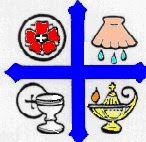
A different take on Baptism (other than the symbolic view and the sacramentarian view)

Full Lecture Hall by Thomas Conner

Class is in session.


You’re probably going to hear some things you’ve never heard before about the Christian faith in this mp3 audio.


…….

It’s not important that you agree with them. Only that you hear them.


………………………..

Click here > Baptism, “free will”, and other stuff

>>>>>>>>>>>>>>>>>>>>>>>>>>>>>>>>>>>


___________________________________________________________________

Many of you have already listened to this before. So have I…a few times. But it doesn’t hurt to hear it again.

___________________________________________________________________

Thanks, Pastor Mark.

Thanks to flickr and Thomas Connor, for the photo.

………………………………………

>>>>>>>>>>>>>>>>>>>>>>>>>>>>>>>>>>>>

Here’s a way, designed by God, to get us off of the spiritual ladder climbing project

 By Pastor Mark Anderson


              BAPTISM: GOD’S DECISION FOR YOU


God has made a decision.  This decision, which we call the Gospel, has been revealed in the life, death and resurrection of Jesus Christ.  God’s decision is to give you forgiveness of sins, life and salvation.  God promises all of this to you as a free gift received by the inspiration of His grace working through faith in Jesus Christ.  And where does God’s decision touch your life?  In baptism, just as the New Testament teaches.

This emphasis on God’s decision for you given through baptism might sound a bit odd.  In fact, you may heard it said that what matters is your decision and that baptism is really of very little importance.  You may have heard it said that you must make a decision to ‘accept Christ as your personal Lord and Savior’, or words to that effect, before baptism means anything.  If you have heard such talk you are certainly not alone.  This view of the Gospel message is widespread.  But is it Biblical?  The expressions “accept Christ” or “make a decision for Christ” are never used in the New Testament to describe how the Christian life begins.  This does not mean that decisions are not important in the Christian life!  Decisions are very important but in a very specific sense.  More about that later.

TWO FORMS OF BAPTISM 

In the New Testament baptism is an issue right from the beginning.  The Gospels report that the great Forerunner of the Messiah, John, was a baptizer.  The baptism that John practiced was very much like what some Christians today call “believer’s baptism”.  John’s baptism was purely symbolic.  It was a covenant ceremony that had no power.  John’s baptism, like the name “believer’s baptism” clearly indicates, belonged to the believer.  It was a baptism through which the believer demonstrated his/her decision to repent and follow God.  The baptism really was just a formality.  What mattered was the sincere decision of the believer.

John recognized the limitations in a baptism based on nothing more than good intentions.  John made this clear when he said that although he baptised with water, when the Messiah came things would be different where baptism is concerned.  The Messiah would institute a baptism with teeth in it!  This is why John could say, “There is One coming after me…who will baptize with the holy Spirit and with fire.” (Matthew 3:11)

The covenant act of baptism would now be the moment when God, through the giving of His Spirit, would make His decision for the believer rather than the other way around.  It would be a baptism rooted not in my decision for God (however sincerely taken), but rather in God’s decision for me!

JESUS COMMANDS THE CHURCH TO BAPTIZE

But how can water actually serve as the instrument of God’s decision for you?  Well, it isn’t just the water.  It’s the water together with God’s Word of command and promise that makes baptism effective.  Let’s look at what the Bible teaches us.

In Matthew 28,  Jesus issued his final command and promise to his disciples.  These words represent the “marching orders” of the Church.  Sometimes they are called the “Great Commission”.  Significantly, baptism has a prominent place in our Lord’s command.

Go, therefore and make disciples of all nations, baptizing them in the name of the Father and of the Son and of the Holy Spirit, teaching them to observe all I have commanded you.  And lo, I am with you always, to the close of the age.” (Matthew 28:19,20)

The first thing to note about our Lord’s words is that they are a command.  In fact, the word ‘command’ in Latin is ‘sacramentum‘, the word from which we derive the term ‘sacrament‘.  Baptism, therefore, is not an option the church or the Christian can take or leave.  We are not to despise baptism or treat it lightly.  Neither are we to speculate on what happens to those who are not baptized.  As followers of Jesus, our job is to carry out His command.  He will deal with the exceptions.  After all, Jesus stated, “I am the way, the truth, and the life.  No one comes to the Father but by me.”  Although this text is often quoted as a condition that people must meet to be saved, that is not what the text actually says.  The text says that Christ will decide who has access to the Father.  How Christ will handle those who do not receive baptism is His business.  Our business is to baptize, as He commanded.

Next, notice the order of Jesus’ command; “baptize” them and “teach” them.  It is clear from the context of this verse that baptism is the instrument by which jesus expected his disciples to receive others into the fellowhip.  Baptism is the point of entry into the Christian life.  Teaching and instruction follow.

In order to make this clear Jesus attaches a promise to baptism and teaching.  He promises to be with church “…always, to the close of the age.”  Jesus promises that in the church’s ministries of baptism and in the teaching (which includes the preaching of the Gospel message) the Holy Spirit will be active and working! 

The most important words in Jesus’ command, however, are these;  “In the name of the Father and of the Son and of the Holy Spirit.”  We baptize with water together with God’s name.  It is not our word (our decision to repent and follow Christ) that is added to the water (as in believer’s baptism).  In baptism God adds His word to the water.  That is why the Lord includes the Triune name of God along with His command to baptize.  He wants the Christian to know and trust that in baptism God promises to give you His name.  This is the central promise God gives you in baptism.  This is the promise we are called to trust, in which we place faith.  It is a promise designed to give comfort and encouragement to sinners.  God promises in baptism to be your God, to identify you with everything He has done for your salvation in Jesus Christ.  God promises to give you the forgiveness of your sins, life and salvation.  You are adopted as a child of God.  He seals this promise in the baptismal covenant with “fire and the Holy Spirit.”

BAPTISM IS RECEIVED IN FAITH

God’s promise to be your God and accompany you through life is a promise you can trust; a promise in which you are called to have faith.  But what is the shape of your life with God?  What does the life of the baptized Christian look like?  The Apostle Paul responds to questions like these in the sixth chapter of the Book of Romans, where we read;

Do you not know that all of us who were baptized into Christ Jesus were baptized into his death?  We were buried, therefore, with him by baptism into death, so that as Christ was raised from the dead by the Glory of the Father, we too might walk in newness of life.” (Romans 6: 3,4)

Dying and rising describe the shape of the Christian life.  Each day we see the evidence of sin all around and within us.  We are reminded of why Jesus died on that cross.  Every day we experience the continual demand of the Law that we fulfill our humanity before God, self and neighbor.  And as we attempt to fulfill our lives we are aware that we are included in the words of Paul to the Romans; “All have sinned and fall short of the Glory of God.”  Daily, as we experience this “falling short“, we are led by the Spirit to repentance (itself an expression of faith) and we trust the promise “that as Christ was raised from the dead by the Glory of the Father, we too might walk in newness of life.”

This means that we return to our baptism every day, “not as a removal of dirt from the body, but as an appeal to a clear conscience, through the resurrection of Jesus Christ, who has gone into heaven and is at the right hand of God, with angels, authorities and powers subjected to Him.” (1Peter 3:21,22)

Notice how 1Peter refers to baptism by indicating it is more than simply the “removal of dirt from the body.”  That’s another way of saying that baptism is more than just an outward, symbolic event.  Rather, Peter makes it clear that baptism is an event that grounds us in God’s promises.  This is why we can look at our baptisms and, in Peter’s words, “appeal to a clear conscience, through the resurrection of Jesus Christ…”.  In Romans 4:23 Paul declares that Jesus “was put to death for our sins and raised for our justification.”  Notice how these two texts, together with Romans 6:3,4, interpret the significance of baptism.  We can dare to trust in what God has done for us in baptism (and therefore have a clear conscience regarding our sin and guilt) because through baptism we are spiritually grafted into the life of Christ Jesus who “was put to death for our sins and raised for our justification.”

CAN BAPTISM BE ABUSED?

Of course!  Although through baptism God promises to give your life back to you through Christ without the accusation of your sins attached to it, you will find it impossible in this life to trust perfectly in God’s promises, in God’s forgiveness.  This lack of trust in God’s gifts promised in baptism will reveal itself in all kinds of ways.

For example, you may say to yourself, ‘I am such a sinner that God could not really forgive me unless I do something to show Him that I am serious about repentance,’   This turns the Gospel on it’s head.  Now, the decision that matters is not God’s decision mde through Christ’s death and resurrection.  Instead, my decision is what counts.  In effect, you are saying that Christ did not accomplish everything that was necessary for your salvation.  You must do something.  This is a common way in which baptism is abused.  We fail to take God at His word!  You want to place more emphasis on humn acceptance or decision for God than on God’s decision for you.  When this occurs God’s grace is minimized and the comfort and assurance in baptism is lost.

Another way in which baptism is abused is by taking it too much for granted.  Some Christians treat baptism like an insurance policy on which all the premiums have been paid up.  Under such circumstances it is easy to abuse baptism by saying things like, “How I live is not very important because I am baptized.  My sins are forgiven. It really doesn’t matter what I do.  Baptism is my insurance policy.”  In this way, God’s claim upon your life is kept at arms length.  You do not live in the daily dynamic of repentance and forgiveness.  You fail to take hold of the freedom which God’s grace has given you.

THE GIFT OF FREEDOM

This brings us to the point I mentioned earlier.  If it is God’s decision for me that is really important, what role do my decisions play?  Galatians 5:1 gives us a simple, powerful answer.  “For freedom Christ has set us free.”  God frees us through faith to be exactly what He created us to be: human beings.  God frees us to live out, in faith, the meaning of the Great Commandment of our Lord.  “Love God and your neighbor as yourself.”  The Christian life is not a call to higher levels of holiness or spirituality.  It is not a life of continual striving to climb a never-ending ladder of spiritual self-achievement.

Your Christian freedom, or “glorious liberty” as the New Testament also calls it, is given through God’s forgiveness so you can be free from having to be preoccupied with your relationship with God.  Because God has chosen you, you are free to let God be God.  He wants you to dare to trust His grace and forgiveness completely.  Christ can handle your salvation very nicely without your help!  In fact, he wants to do just that.  Now, free from seeing the Christian life as a religious self-improvement project, God’s Spirit works with and through you to reach others with this Good News!  You are free to use your decision-making powers for the good of your neighbor.  Through faithful worship, serving, learning and witness, you employ all of your life’s energies and resources as a good steward, seeking to bring Glory to God in Christ through the faithful use of your humanity in love for your neighbor.

Finally, in baptism God calls you to trust that He is the One who takes the initiative to forgive you, sustain you through life and raise you from the dead when your life is over!  Your confidence is not in yourself but in Christ.  You take Jesus at His word when He says, “You did not choose me but I chose you,…” (John 15:16).  You are free in God’s love and grace to boldly “walk in newness of life” without being preoccupied with living on this earth as a good manager of what God has provided as you let God handle the life in the Spirit.  You live with confidence, not in your decision for God but in God’s decision for you!

                                       _________________________________

Pastor Mark Anderson is pastor of Lutheran Chrurch of the Master, Corona del Mar, CA 92625  

___________________________________________________________

Do you know anyone that might benefit from reading this?

Please pass it along if you do. It could help to set someone free.

Thanks.

>>>>>>>>>>>

……

The Stuff of Jesus: Baptism 2


Acts 4:11 This Jesus is the stone that was rejected by you, the builders, which has become the cornerstone. 12 And there is salvation in no one else, for there is no other name under heaven given among men by which we must be saved. ESV

We see clearly that in the name of God, in the name of Jesus, there is salvation. When a person is baptized into the name of the Triune God there is salvation. This is so painfully clear one wonders why it is so hard for some to come to understand. They maintain baptism is the Christian’s work to show loyalty to Jesus and make a profession of faith in him for salvation. There is a dearth of scripture that teaches that fact so it is merely church tradition once again, wrongly, being placed over and against clear scripture.

Ephesians 5:25 Husbands, love your wives, as Christ loved the church and gave himself up for her, 26 that he might sanctify her, having cleansed her by the washing of water with the word, 27 so that he might present the church to himself in splendor, without spot or wrinkle or any such thing, that she might be holy and without blemish. ESV

For to be baptized in the name of God is to be baptized not by men, but by God Himself. Therefore, although it is performed by human hands, it is nevertheless truly God’s own work. From this fact every one may himself readily infer that it is a far higher work than any work performed by a man or a saint. For what work greater than the work of God can we do?*

Baptism is not man’s work whatsoever. Nor is it the invention of man. Jesus uses the hands and the voice of the minister to apply the water and to invoke the name of God. However, it is clearly Jesus doing the baptism. Jesus has located the delivery of the fruit of the cross in the preached word and in baptism. He cleanses his church and makes it to his sight without spot or wrinkle no matter what sin captivates the heart and mind of the baptized believer. Rather than rejoicing in the sin like the unbeliever he or she will be granted repentance in the same Triune name of God. These are strong and precious promises given to us in God’s word. Jesus has given us such a wonderful gift in baptism that no matter what the world, our own sinful flesh or the devil says or does we remain able to tell them “I am baptized!” Let us believe this good news and live in the peace it gives.

In the name of Jesus. Amen. †

* The Large Catechism of Martin Luther.


          Posted by David Cochrane  at http://fivepintlutheran.blogspot.com/
 
_________________________________________________________
 
Thank you, David, for the great reminder of God’s grace poured out for sinners in Holy Baptism!
 
 
.

My Friend’s Baby


I have a friend at work who is pregnant with her first child. A beautiful baby girl (I saw the ultra sound pictures, so I know).

Anyway, we have been discussing Baptizing her baby, vs. dedicating her  baby.

So this is for her.  If you want to listen also, well…ok. It won’t hurt you to hear about the graciousness of our Lord and how He loves adopting little babies and giving them His name and making them His own…vs. stuff  WE PROMISE to do.


Anyway…here it is > Baptism and Holy Communion

________________________________________________________

Thanks to flickr for the photo.

.

How can you have any assurance that you are a child of God?

Baptism…that’s how. 

Check out the great post concerning baptism and the assurance that God wants you to have in yours, over at David’s blog:

http://fivepintlutheran.blogspot.com/

  Who does the baptising?

If we do it, then how can we trust in it?

If God does it, then can’t it be fully trusted?

Does anything really happen in baptism, anyway?


Do you feel like you are a Christian and strong in the faith one day…and then the next day or week, you have almost forgotten about Jesus and wonder just how much of a Christian you really are?

Baptism is a topic that often flies under the radar, so we like to bring it out in the open every once in awhile.

Thanks to David over at ‘Five Pint Lutheran’ for bringing it to the fore yet once again.

Here’s another good one on the assurance of your election:

  click here>  The-assurance-of-your-election  


(This is a re-post from a while back).

.

‘The Baptism of Jesus’

The Baptism of Jesus by Travis S.

This was not the sermon for the 2nd Sunday in Lent 2011, but it is a Lenten sermon about Holy Baptism.  Yes, “Holy Baptism”.  Baptism is an act that God performs for us, so it is set apart for God’s special purpose, which more than qualifies it to be “Holy”.

Yesterday while driving to church, my wife and I were listening to a radio preacher who has a program called  ‘The Jesus Christ Show’, where he speaks and takes caller’s questions as though he were the person of Jesus Christ. He says things like this, “I walked on the water in order to…”    Anyway, a caller called in to ask about baptism, infant baptism, etc., and this radio preacher proceeded to demolish baptism as an act of God and made the thing into into an act of faith on the part of believer.  Wrong, wrong, wrong, wrong, wrong. This heretic radio preacher proceeded to rob the assurance, that God wants His children to have, right from under them. It was sickening. But hey, that’s what Southern Baptist (non-denominational) preachers do, they turn the whole thing (Christian faith) into a spiritual ladder climbing project that focuses on ‘your faith’, ‘your seriousness’, ‘your feelings’, ‘your whatevers’. It always ends up that way.

Here’s a sermon that explains  Holy Baptism:

                                 click here > The Baptism of Jesus

________________________________________________________

For those of you expecting to hear yesterday’s sermon, the master (CD) was inadvertantly taken home by a parishoner. Once I get it back, I’ll put it up for you.


If anyone wants to defend heretical forms of baptism such as “believer’s baptism”, feel free to chime in. We may not love heresies, but we love heretics, and we’re always happy to fill you in on what the Bible has to say about these bones of contention that we have together. 

And we are not afraid to do a little theology in order to make the Bible more clear in bringing forth Christ and His great love for sinners. 

________________________________________________________

Thanks to flickr and Travis S. for the photo.


.

Re-Baptism…

Schatztruhe, Reichsburg Cochem - Cochem Castle, Treasure Chest by destinatio

 …Faith, Emotionalism, Anabaptists, Works Righteousness, Infant Baptism.

All this and more are touched upon in this audio selection delivered by Pastor Mark Anderson.


click here >  FAITH


There’s  plenty here to get your hackles up, or get your head nodding in approval…or both!

Let us know what made an impression on you, either good…or bad.


Thanks.


.

Can God actually make one ‘alive’ in Baptism?

Yes, He can.  A baby is baptized aboard USS Boxer. by Official U.S. Navy Gallery

It’s ALL OVER the Bible.

God uses water to kill. And God uses water to save. Is that not what St. Paul is describing in chapter 6 of Romans? Is it the water, only? Heck NO ! His Word is attached to that water!

God gives the Holy Spirit in Baptism. He forgives sin. He grants you salvation. He gives you His name. He gives you His very Life.

He also does this in His Supper. They (the Sacraments) are pure gospel. Coming to us from outside of ourselves, so that we can be His without having to jump through any religious hoops of our own making.

This just runs against our reason and the desires of The Old Adam and Old Eve to be our own little gods. There are so many that despise the Sacraments. They view them as “religion”. Then attempt to justify themselves by what they say, think, feel, and do. Talk about “religion”! Sheesh!


PS- God does NOT need to have someone be a certain age before His power and grace will kick in. He is, after all, a REAL GOD!

.

Despising Baptism.

Is ‘despise‘ the right word?  by Gregor Winter

If you don’t really believe anything actually happens in Baptism, then…why bother?

 “Because Jesus told us to do it. Because it’s all over the Bible. Because it’s “Christian tradition”? Because it seems like the right thing to do?”

Well… I think that the Scriptures are quite clear that something actually happens in Baptism, and I think that Jesus was NOT into empty religious ritual…‘just because’.

So then, what is going on in Baptism? Could God’s power and God’s grace and God’s Spirit actually be given to the person (what does the Bible say…over 12 years of age???)?

I think so. (maybe it’s over 8 years old???) (what does the Bible say about the right age?)

So…if we’d rather trust in OUR decison, or OUR acceptance of Jesus…then do we “despise” what God would do for us, in Baptism?

Do we war against God’s unmerited favor for us, before we can act on our own?

I think we do.


.

Why are Little Children Excluded from the Grace of God?

LDS Temple in Salt Lake City by mstrwhew

From Pastor Bror Erickson’s blog
.
[Book of Mormon]
And now, King Benjamin, thought it was expedient, after having finished speaking to the people, that he should take the names of all those who had entered into a covenant with God to keep his commandments. And it came to pass that here was not one soul, except it were little children, but who had entered into the covenant and had taken upon them the name of Christ.
          __________________


Poor little children. Why had they not entered into this covenant and taken upon them the name of Christ. If we are talking about the same Jesus Christ of the Gospels Matthew, Mark, Luke, and John, it would seem odd that his name was not given to the little children, that they were not also saved by this “covenant.” The Jesus of the Gospels loves little children. In fact, God, in revealing his gracious will to the world through Holy Scripture, shows that he loves little Children when he sets up a “covenant” with Abraham.
.
I put the word covenant in parenthesis, because I think it is slightly misleading. God gives a testament through which his people inherit grace. As Paul talks about it in Galatians, and indeed elsewhere, he talks about people being heirs, coheirs, and inheriting. This language tells you what kind of “covenant” God has made with Abraham, and it is not your run of the mill 50/50 covenant, but a testament, a will. “For if it is the adherents of the law who are to be the heirs, faith is null and the promise is void.” (Romans 4:14 (ESV) “And if children, then heirs—heirs of God and fellow heirs with Christ, provided we suffer with him in order that we may also be glorified with him.” (Romans 8:17 (ESV) “ And if you are Christ’s, then you are Abraham’s offspring, heirs according to promise. (Galatians 3:29 (ESV) “This mystery is that the Gentiles are fellow heirs, members of the same body, and partakers of the promise in Christ Jesus through the gospel.”( Ephes. 3:6 (ESV) “So that being justified by his grace we might become heirs according to the hope of eternal life.” (Titus 3:7 (ESV) You don’t become an heir by any old “covenant” but by a Testament. And God is not so fickle a father to cut little children out of the inheritance because they are too young to make false promises of obedience to Him. In fact he commands Abraham that all his children are to be circumcised on the eighth day. Because the circumcision was a seal of this testament he made with Abraham. And in the gospels he shows himself to be very loving towards these little children, taking them in his arms and promising that the kingdom of heaven belongs to such as these, in fact going so far as to say that if your don’t receive the kingdom of God as a little Child you will not receive it at all. “ But when Jesus saw it, he was indignant and said to them, “Let the children come to me; do not hinder them, for to such belongs the kingdom of God. [15] Truly, I say to you, whoever does not receive the kingdom of God like a child shall not enter it.” (Mark 10:14-15 (ESV) Later he extends this kingdom to them promising that the gift of the Holy Spirit through baptism is not just for adults, but for their children also. “ And Peter said to them, “Repent and be baptized every one of you in the name of Jesus Christ for the forgiveness of your sins, and you will receive the gift of the Holy Spirit. [39] For the promise is for you and for your children and for all who are far off, everyone whom the Lord our God calls to himself.”( Acts 2:38-39 (ESV)
.
So now why are they excluded from these promises, cut off from their inheritance etc. in the Book of Mormon? Perhaps because it is a work of fiction written by an ex Campbellite/Baptist preacher named Rigdon? Perhaps because it has nothing at all to do with the Jesus Christ of the New Testament? Just a couple thoughts.


________________________________________________________
 
 
How about you?  Any thoughts?
 
 
Here’s one from me:
 
‘what in Heaven’s name does Mormonism have in common with Biblical Christianity?’


.
 
.