Romans 11

680c60_27509df8a9964508067c063c7c5cc4f7


“For God has consigned all men to disobedience, that he may have mercy upon all. O the depth of the riches and wisdom and knowledge of God! How unsearchable are his judgments and how inscrutable his ways! For who has known the mind of the Lord, or who has been his counselor? Or who has given a gift to him that he might be repaid? For from him and through him and to him are all things. To him be glory for ever.  Amen.”

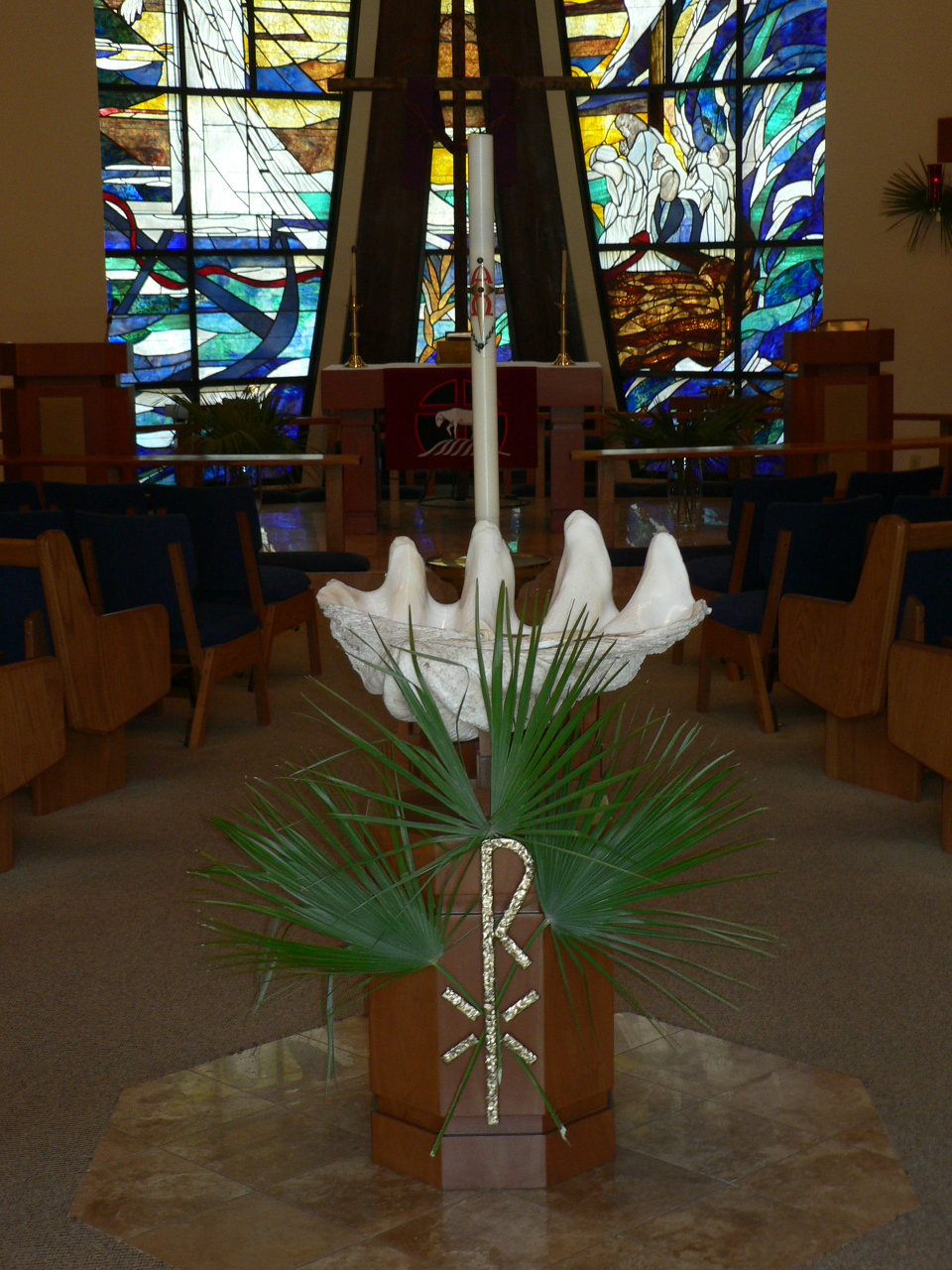
The photo above is of the baptismal font in our sanctuary. It stands centrally in the aisle and greets worshipers as they enter. Seeing it reminds of me of an event from years ago.

I was visiting a friend who had just started his ministry in a new congregation. While I was there he asked it I would help him with a project. With toolbox in hand he took me to a closet located near the altar at the side of the sanctuary. He opened the door to reveal a wooden baptismal font on wheels. An hour later we had removed the wheels and permanently attached the font to the floor just inside the entrance to the sanctuary.

The explosive language of Paul in the text above is not language that wonders at a God we can’t figure out. It is the language that marvels, wonders at the unfathomable grace of God that has not given up on this tiny world. To go a step further, it is the language of one for whom the story of Jesus, His cross and resurrection, have become defining. For not only has God not given up on this world, in Jesus He has committed Himself to this world, in justice and mercy, when there is no obligation for Him to do so.

The Gospel of Jesus, mediated through the word and sacraments, bring us into the story of God. Sacraments are the living events through which God continually comes to us and keeps us in His grace, shapes us and conforms us to the death and new life of the cross and resurrection. Baptism and the Lord’s Supper are not ambiguous events, shifting sands. The sacraments are events in real time, part of the actual story, history of God’s people, where we are encountered by God’s faithfulness, through which God creates trust by extending His mercy and grace.

My friend was absolutely right in reaffirming baptism as a symbol of permanence, and to locate that symbol in a place where the worshiping community could not push baptism into a closet. Now, they would come face to face with baptism every time they gathered. They would come face to face with an unbuffered view of the self and God in the light of the cross.

As you come and go from worship, the font stands as a reminder of the certainty of God’s judgment on sin and the certainty of God’s grace and mercy. The sacrament of baptism is not a symbol, an ambiguous spiritualizing of God. Baptism is a tangible, on going God-event in which He commits Himself to the death of your old self and the bringing to life of the new you in Christ.

A movable font is symbolic of how we can make destructive even the story of Jesus. For such a practice presents us with baptism as a perfunctory ritual, removes it from it’s central place in worship, in effect rendering ambiguous and uncertain the utterly reliable certainty of God’s grace. It becomes a symbol of our ambivalence about baptism, about God, about ourselves.

On the other hand, the immovable font, the place of grace, plants God’s decision for us firmly in our midst as a worshiping community. It states clearly that grace comes before faith. It makes clear that the Church is not first and foremost a community of faith but a community of grace. For, the great story of Jesus is the story of God’s faithfulness to a disobedient, faithless, violent and corrupt world. No wonder Paul marvels at the “depth of the riches and wisdom and knowledge of God”. For He owes us nothing. Yet, in Christ Jesus, He has given us everything. This is the utterly gracious, reliable and unshakable promise of your baptism.

_

“May the peace of God that passes all understanding keep your hearts and minds in Christ Jesus our Lord.”


_____________________________________________________________________________

From Pastor Mark’s daily devotional blog, December 2012


The Promise, Predestination, and Christian Encouragement


paulson-lutheran-theology-325x500680c60_2ee5d0cc191a97cf779f8d84ff50b5cb-jpg_512-1


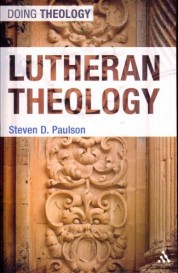
All out of Steven Paulson’s, “Lutheran Theology“.

Join Pastor Mark as he unpacks these key themes in his latest class on Paulson’s book:

 > The Promise, Predestination, and Christian Encouragement

_______________________________________________________________________________________

Thank you, Pastor Mark.


“Then God set up a Cross”

680c60_db8f493e5872151a284eb95ba210bad4


“…Jesus our Lord, who was put to death for our trespasses and raised for our justification.”

                                                                                                            – Romans 4:25

_

The ancient world was a vast field of magnificent temples. Only buildings bespeaking power, permanence, and ultimate authority could adequately proclaim the mystery of divinity. The gods deserved nothing less, or so thought the ancients.


Then God set up a cross.

It was forged by nameless servants of imperial authority. A bare, rude thing. A time tested instrument designed to evoke terror and coerce obedience through the application of unspeakable cruelty. Only the very worst, despised offenders suffered the fate of the crucified ones. The Romans lined roadways with them so that passers by would be forced to carry the weight of pitiful suffering and inhale the stench of rotting corpses. It was about as far from divinity as one could get. This is the symbol of God’s presence with us?

Yes.

God set up His cross where the four roads we travel most, meet: guilt, failure, spiritual poverty, and willful disobedience. The gift of God’s cross, the baptism into Christ’s death, is not given until I see that nothing in the world – nothing – can address my sickness unto death except this one, impossible, ridiculous sacrifice. For only by the shame, cruelty and utter godlessness of the cross can the true magnitude of our guilt – and God’s merciful love – be measured. The cross proclaims to us what our true position in life really is. No wonder we flee from it for all we’re worth.

But Christ Jesus did not flee from the cross. He embraced it’s suffering and shame in love – for you. And three days after they laid His battered corpse to rest, God vindicated His trust and raised Him from the dead.

Through Word and sacrament God continues to set up the cross – and the empty tomb – in the center of our lives, and through them releases faith, hope and love. And since Christ Jesus embodies hope He rightly calls us to hope – not in our efforts, our so-called free will or determination, but in Him, the crucified. This is the scandal of the gospel – Jesus appears in the defenseless form of the crucified God to put an end to our pretensions to righteousness in order that we might have a righteousness based on faith. A righteousness won for us, the ungodly, through His death on the bloody cross and His resurrection from the dead, where the true glory of God is revealed.

_________________________________________________________________________________________________

From Pastor Mark Anderson’s daily devotional blog, 2012


Return to your Baptism…each day.

680c60_dd6b4c75e21d8ed3233348d2dbb0bfee


“As your days, so shall your strength be.”  Dueternomy 33:25

_

A man once laughingly observed to a friend, “God has extremely high regard for my capacity to endure hardship; for hardship is pretty much all I know!”

As we stand on the threshold of a new and untried day, we do not know what this day will bring. Will it bring good? Will it bring unwelcome misfortune and hardship? Perhaps it will bring both. It’s probably best to not dwell too much on these questions as we make preparation to enter the day. Instead, God invites us to dwell on His promises.

He has promised to give strength for every need. He has promised that no burden is too great for us to bear because we have Him. He has promised to those who belong to Him that He will work all things for our good.

With these promises going before us we may enter the day with gratitude, anticipating the opportunities it brings; the chance to provide daily bread, be with friends, share the love of family, enjoy our interests and serve others where we may.

When hardships come it may be more difficult to see our Lord at work in them. Faith may falter. When this happens we are invited to return to our baptism and kneel at the foot of the Cross, under the steadfast love of the Redeemer who gave Himself for us. There we are reminded that no trial, suffering, discouragement or hardship fall outside the vast perimeter of God’s grace.

Therefore, we may step across the threshold of each day in the sure and certain knowledge that we are held in the baptismal promises of God; and that the story that will be written, even this day, will be the story of God’s faithfulness to us – in all things.

“May the peace of God that passes all understanding keep your hearts and minds in Christ Jesus our Lord.”


                          – Pastor Mark


The Purpose of Jesus’ Parables

3274tissothidde_00000002535

He made them up. He made them, ‘over the top’.

Why?

 Listen to > The Parables of Jesus

_______________________________________________________________

Thank you, Pastor Mark.

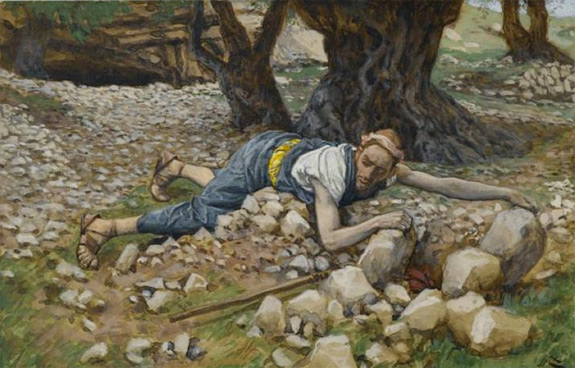
Thanks to WikiArt.org, for the photo.


Romans 5:2


“Through him we have obtained access to this grace in which we stand, and we rejoice in our hope of sharing the glory of God.”

_

I had given her a book to read which layed out a Lutheran understanding of the Christian faith. She came from a Christian church which placed much emphasis on works, on gaining spiritual ground in this life which would translate into rewards in the next. After finishing the book she came back to see me. Her comment? “You Lutherans have it too easy. Everything depends on grace.”

This young woman is not alone in her assessment. Strange at may seem to those of us who have been nurtured in a church where grace is central, many Christians are suspicious of reliance on grace. One Christian has gone so far as to call the Lutheran Church a “grace cult”.

When Paul wrote the Christians in Rome, whom he had never met, he anticipated their objections to his message of grace when he wrote, “What shall we say? That we sin all the more so grace will abound all the more”? Paul must have run into this question a thousand times.

Paul knew full well that grace seems easy and bland, a cop out, only to those who do not fully appreciate the gravity of sin, who have not seriously tried to meet the demands of God’s law. God does not grade on the curve. Have you tried, really tried to love God with all your heart and soul and mind and strength and you neighbor as yourself? How about striving for righteousnes, purity of heart?

Paul did and so did Martin Luther. And what happened? They pursued a ‘godly life’ with such fervor that it drove them to the wall. They came to see the towering righteousness of God as an impossible mountain to climb.

Now, it is “… through Him that we obtain access to this grace in which we stand.” Grace has not come to us at some bargain basement price. It is not a cheap remedy for a bland illness. Grace has come through Him, through the crucified and risen Jesus. Blood was shed. A death occurred. A funeral took place. Wonderul, beautiful Jesus was cast away like so much unwanted trash. That is the cost of grace.

Those who object to the sufficiency of grace have yet to appreciate the gravity of their sin and the greatness of Christ. But when these two meet, then we can truly rejoice and proclaim from the rooftops, “Everything depends on grace!”

_

“May the peace of God that passes all understanding keep you hearts and minds in Christ Jesus our Lord.”


_______________________________________________________

From Pastor Mark’s daily devotional blog, 2012

Thank you, Pastor Mark.


“Love”

love


I posted this class a while back, but I was listening to it again yesterday and thought it worthy of reposting:

 Listen to > “Love”

_____________________________________________________

Thank you, Pastor Mark.

Thanks to wehacklife.com, for the photo.


Do NOT miss this discussion of “free-will”

Thank you, Pastor Mark!

 Listen to > So-called, “free-will”

It’s connected to Chapter 10 in Paulson’s book.

_______________________________________________________


Take a good, long, sober look at the world…and at yourself…


Would you rather squint your eyes at the lights at night and see a make believe wonderland? Or open them wide and see reality as it is?

Reality is what we need to see, as hard as it may be at times.

But there is a greater reality that we can’t see. One that we can hear…and taste…and receive in faith and hope.

Pastor Mark’s sermon for the 6th Sunday after Pentecost:

 Listen to > The Bad…and Good of Reality in this World

__________________________________________________________________________________

Thank you, Pastor Mark.


– 

Thanks to nicolearnoldphoto.com, for the photo.


“The State of the Promise”

Pastor Mark teaches in Steven Paulson’s book, “Lutheran Theology”, … Chapter 10, ‘The State of the Promise ‘.

_

Another heavy dose of the radical gospel and  the Theology of the Cross:

 Listen > The State of the Promise – Chapter 10

___________________________________________________________________

Thank you, Pastor Mark.