The Law

[23] Luther’s proof, Thesis 23:


The law brings the wrath of God, kills, reviles, accuses, judges, and condemns everything that is not in Christ [Rom. 4:15].  

Thus Gal. 3[:13] states, “Christ redeemed us from the curse of the law;” and: “For all who rely on works of the law are under the curse” [Gal. 3:10]; and Rom. 4[:15]: “For the law brings wrath;” and Rom. 7[:10]: “The very commandment which promised life proved to be the death of me;” Rom. 2[:12]: “All who have sinned without the law will also perish without law.” Therefore he who boasts that he is wise and learned in the law boasts in his confusion, his damnation, the wrath of God, in death. As Rom. 2[:23] puts it: “You who boast in the law.”


The law does not work the love of God — it works His wrath; it does not give life — it kills; it does not bless — it reviles; it does not comfort — it accuses; it does not pardon — it judges; it does not save — it condemns. In our active efforts to strive to righteousness through our own works, we stray, ironically, farther from our goal. Only in passive rest in Christ, through His grace, can we achieve it.


_________________________________________________________


How then, are we to love the Law?


From The Heidelberg Disputation

[26] Luther’s proof, Thesis 26:

The law says, “Do this,” and it is never done. Grace says, “believe in this,” and everything is already done.

The first part is clear from what has been stated by the Apostle and his interpreter, St. Augustine, in many places. And it has been stated often enough above that the law works wrath and keeps all men under the curse. The second part is clear from the same sources, for faith justifies. “And the law (says St. Augustine) commands what faith obtains.” For through faith Christ is in us, indeed, one with us. Christ is just and has fulfilled all the commands of God, wherefore we also fulfill everything through him since he was made ours through faith.

The law cannot bring into being that which it commands. Paul wrote, “By the works of the Law no flesh will be justified in His sight; for through the Law comes the knowledge of sin.” (Rom. 3:20) And: “For what the Law could not do, weak as it was through the flesh, God did: sending His own Son in the likeness of sinful flesh and as an offering for sin, He condemned sin in the flesh, so that the requirement of the Law might be fulfilled in us, who do not walk according to the flesh but according to the Spirit.” (Rom. 8:3-4) And: “For Christ is the end of the law for righteousness to everyone who believes.” (Rom. 10:4) Paradoxically, what the law requires is freedom from the law.

Christ has fulfilled all things and, through faith, we are at one with Him. “Therefore let it be known to you, brethren, that through Him forgiveness of sins is proclaimed to you, and through Him everyone who believes is freed from all things, from which you could not be freed through the Law of Moses.” (Acts 13:38-39) Paul wrote, “A man is not justified by the works of the Law but through faith in Christ Jesus, even we have believed in Christ Jesus, so that we may be justified by faith in Christ and not by the works of the Law; since by the works of the Law no flesh will be justified.” (Gal. 2:16)


________________________________________________________


Is there any wiggle room here, for what ‘we do’?

Should there be, when it comes to righteousness?


Finger Pointers

“Well, you just can’t live anyway you want!”

Is that right? 

Funny, you seem to be doing exactly that. You say that Christians can’t live anyway they want, but then you go right on committing the same sins over and over again, and omitting the same works for the neighbor over and over again.

So which is it? Can you, or can’t you just live anyway you want? And if not, then when are you going to get with the program?

And don’t you think your time would be better spent focusing on yourself, rather than worrying so much about Joe and Mary in the pew in front of you?


Just a few questions  😀


 _______________________________________________________________


I’d rather have my teeth pulled out…

than have to sit through this stuff for an hour, or 5 minutes.


HT to http://badvestments.blogspot.com/

_______________________________________________________________


Once again, I am speechless.

You?


Grace Trumps the Law

Sorry to burst your bubble, but it’s true.

We are inveterate ‘doers’. The law is wri tten upon our hearts. We want to justify ourselves if it kills us.

Ignorance of, or inability to distinguish God’s law from God’s gospel is a plague in the church.

“Well, it says right here in 2nd Macedonians 11 that we really ought to be doing good works to please God.”

So, then why aren’t you?

Why are we so consumed with what the Bible has to say about good works and then utterly ignore them unless it is to tell our neighbor to do them?

Have you noticed that?   The do’s and don’ts of the law are never really taken seriously by the one who speaks of them. But the accusing finger is wagged in every direction but back at the self.

There is law language all over that Book. And there is gospel language all over that Book.

Should we, as Christians, ignore the law and ignore the needs of our neighbors?

Of course not!  We ought jump in with both feet! We ought do all we can!

But not to aqcuire anything at all for ourselves. We already have all that is needful…in Christ. We have put on Christ in our baptisms! (Gal.3:27)

How can doing good works make you any better of a Christian than that?  They can’t!

But if you mix up doing good works for the neighbor and doing good works to gain some elevated status in God’s eyes, then you may be a modern day Pharisee, and you may be in the process of cutting yourself off from God’s grace.

“We’ll then, how am I to know that I’m really a Christian?”

Remember 4/4 …  Romans 4:4&5 ,  that is.  “Now to one who works, his wages are not reckoned as a gift but his due. And to one who does not work but trusts him who justifies the ungodly, his faith is reckoned as righteousness.”

Grace trumps Law… and it trumps it every time.

By the way, you are now free (because of Christ) to go out and do all the good works you want, without having to fear messing up in any way.

  Your friends, family, neighbors, homeless people, old folks in nursing homes, young people in cancer wards…they could all benefit from your desire to do good works.

So…have at it!

_______________________________________________________________


Are you a godly worker?  Or are you an ungodly truster?

Sometimes it is a hard thing to admit. But when he hung on that cross and asked the Father to “forgive them, for they know not what they do”, he was speaking about you and me, also. Not just those there in front of him.


Oldie but Goodie

This is from a few years ago at the height of ‘The Purpose Driven Life’ stuff.

It is by Frank Marron and it was posted on Beggars-All-reformation-and-apologetics-blog


Summary: Although the book The Purpose Driven Life (TP DL) begins well by insisting the purpose of life is not about man but rather God, author Rick Warren devotes the entire book on how to improve the spiritual life of people, similar to any self-help book. Rather than emphasizing the Gospel of Jesus Christ and what God has accomplished in His Son, Warren presents over 160 legalistic rules by which men can obtain and live a victorious “purpose-driven” Christian life. In reality, TPDL offers nothing more than the repetition of ancient heresies and false teachings which sparked the 16th century Reformation. St Paul addressed similar heresies when he wrote his letter to the Galatians and which have continued to plague the Christian faith throughout history. The book is written from an Arminian or semi-Pelagian theological viewpoint, rather than orthodox Christianity as found in the bible. The author illustrates the system of theology known as Theology of Glory(TG), which is the exact opposite of the Christocentric system referred to as Theology of the Cross(TC). The bible is centered in the works of God as shown in the perfect life, death, and resurrection of His Son Jesus Christ, not the works of man. However, author Rick Warren devotes his entire treatise on convincing readers that they need to perform good works in order to ensure their status in heaven. Warren maintains that all men have free will and our acceptance by God is based upon our choices and obedience to God’s will. This is a throwback to the heresies of Medieval Roman Catholicism confronted by Martin Luther. Readers of TPDL are not pointed to Christ as their Righteousness, but instead are directed to dedicating themselves to “40 days of purpose”.


One of the most popular books in Christian bookstores is The Purpose Driven Life (TPDL) by author Rick Warren, pastor of Saddleback Community Church in Lake Forest, California. Even secular authorities, including President George Bush, have praised the insights of author Rick Warren. Many news reporters have seen fit to interview this highly successful writer. After all, TPDL has sold upwards of 25 million copies worldwide, an incredible accomplishment by any standard. I will attempt to provide insights as to why this book is so successful and whether it is in conflict or harmony with basic Christian doctrine as found in the Scriptures, as rediscovered during the 16th century Reformation in Germany.

Merely reading through TPDL shows it’s appeal to the masses. It is well written and appeals to the logic and common sense of the average person. All well written self-help books are always successful in the marketplace and Zondervan Publishing is certainly capitalizing on this fact in their sponsorship of TPDL. Basic Christian doctrine asserts that everyone is born in spiritual depravity having absolutely no inclination to love, trust, and obey the true God as revealed in Holy Scripture(Ps 51:5;Rom 3:23;5:12). St Paul refers to this basic degenerate nature within each of us as the “Old Man” or “Old Adam”, inherited from the original Adam(Col 3:9;Eph 4:22;Rom 6:6). This sinful, prideful, and arrogant nature remains within all men throughout their earthly lives. The reason for the overwhelming success of TPDL is that it appeals to the Old Adam within each of us. The Old Adam is delighted in hearing that there is a purpose to his life and that by focusing on finding and fulfilling that purpose he can have fellowship with God. This book is a repetition of the Galatian heresy, where St Paul wrote to the churches in Galatia and lamented:

Galatians 3:1-3
O foolish Galatians! Who has bewitched you? It was before your eyes that Jesus Christ was publicly portrayed as crucified. [2] Let me ask you only this: Did you receive the Spirit by works of the law or by hearing with faith? [3] Are you so foolish? Having begun by the Spirit, are you now being perfected by the flesh?

The basic human nature in Adam is to believe that man has to do something to please God. The fifth century heresy of Pelagius taught that man is not totally corrupt and can be saved by an act of his will. This theological error continued throughout history with notable adherents such as Jacob Arminius, Charles Finney, and modern Evangelicals such as Billy Graham and Rick Warren. Arminian theology rejects the total depravity of natural man and this is the underlying assumption throughout TPDL. This book is written to everyone, not just Christians.Christian theology derived from Holy Scripture teaches that by the Grace of God through the vehicle of Faith, natural degenerate man can become a temple of the Holy Spirit. The perfect life, suffering, and death of Jesus of Nazareth resulted in the New Covenant in His blood, enabling saving faith and the grafting of men into the body of Christ through Word and Sacrament. This regenerated man is referred to as a New Creation or “born again”(John 3:3ff;2Cor 5:7;Gal 6:15). The biblical message is that the Old Adam cannot be corrected and improved, as suggested in TPDL, but instead must be crucified and buried so that an entirely new life emerges in the waters of baptism. (cont.)

Read-the-full-article-here

_______________________________________________________________


I thought  Mr. Marron did a nice job of explaining the theology of glory as opposed to the theology of the cross vis-a-vis Rick Warren’s book.

Have you read the book? Do you think this article was a fair critique?

Thanks to Pastor Pat Thurmer for sending me the article.


Why Lutheran?

From the good folks at Living Faith Church, Cape Coral, FL and Pastor Patrick Thurmer.

This page is a collection of thoughts to answer the question… “Why Lutheran?”
If you have some helpful answers to this question, please email them to us at
livingfaithchurch@gmail.com


  • Lutherans know that God comes down the ladder. We are not able to climb up any ladder of righteousness or spirituality or piety or goodness to reach God and attain some status of holiness or purity. We are not able to climb up some ladder to achieve happiness, fulfillment, contentment. Though we constantly struggle to get up the ladder, to get above others, the ladders we climb just lead us further and further from God and true community. Rather, God comes down the ladder to us, blesses us, graces us, loves us. What did I do to deserve this? Nothing. That’s just the nature of God.
  • Lutherans know that God dwells where we least expect God to dwell. We know that God is most clearly seen in odd, out-of-the-way places such as the suffering on the cross, or the shame of the animal stable, or among the outcasts. Or with people who can’t climb a ladder to save themselves. When we humans draw lines dividing us from them, good from bad, righteous from unrighteous, God is on the other side of the line. And the Cross forces us to the other side of the line, the other side of the train tracks, the other side of life, to look at and experience God’s presence amidst suffering and brokenness.
  • Lutherans take sin seriously. In our liturgy many of our churches proclaim, “We confess that we are in bondage to sin, and we cannot free ourselves.” Lutherans admit that on our own we cannot escape the power of sin. We do not have a free will – our will and our whole being is bound to sin. Lutherans are, frankly, quite pessimistic about human nature. (cont.)
  • Read the rest of ‘Why Lutheran’ http://www.livingfaithcapecoral.com/WhyLutheran.html

_________________________________________________________

 (I’m fully aware that the recent ELCA vote on Human Sexuality throws a monkey wrench into this for many. But let’s try and keep the revisionists within the ELCA and elsewhere in Lutheranism out of this discussion of traditional Lutheran theology. Living Faith Church is affiliated with the Luthren Brethren denomination.)


For Lutherans– Is there anything that you think ought be added, or taken out?

For Non-Lutherans– Is there anything that needs further clarification, or that you think is theologically unfounded?


From Luther’s Commentary on Galatians

For it is written, Cursed is every one that continueth not in all things which are written in the book of the law to do them.

Paul goes on to prove from this quotation out of the Book of Deuteronomy that all men who are under the Law are under the sentence of sin, of the wrath of God, and of everlasting death. Paul produces his proof in a roundabout way. He turns the negative statement, “Cursed is every one that continueth not in all things which are written in the book of the law to do them,” into a positive statement, “As many as are of the works of the law are under the curse.” These two statements, one by Paul and the other by Moses, appear to conflict. Paul declares, “Whosoever shall do the works of the Law, is accursed.” Moses declares, “Whosoever shall not do the works of the Law, is accursed.” How can these two contradictory statements be reconciled? How can the one statement prove the other? No person can hope to understand Paul unless he understands the article of justification. These two statements are not at all inconsistent.

We must bear in mind that to do the works of the Law does not mean only to live up to the superficial requirements of the Law, but to obey the spirit of the Law to perfection. But where will you find the person who can do that? Let him step forward and we will praise him.

Our opponents have their answer ready-made. They quote Paul’s own statement in Romans 2:13, “The doers of the law shall be justified.” Very well. But let us first find out who the doers of the law are. They call a “doer” of the Law one who performs the Law in its literal sense. This is not to “do” the Law. This is to sin. When our opponents go about to perform the Law they sin against the first, the second, and the third commandments, in fact they sin against the whole Law. For God requires above all that we worship Him in spirit and in faith. In observing the Law for the purpose of obtaining righteousness without faith in Christ these law-workers go smack against the Law and against God. They deny the righteousness of God, His mercy, and His promises. They deny Christ and all His benefits.

In their ignorance of the true purpose of the Law the exponents of the Law abuse the Law, as Paul says, Romans 10:3, “For they, being ignorant of God’s righteousness, and going about to establish their own righteousness, have not submitted themselves unto the righteousness of God.”

________________________________________________________

I was having a discussion on another blog with a gentleman that could not seem to give up the idea of ‘HAVING TO DO’ works of the law.

I tried the ‘WE WANT TO DO’ works of the law tack, but he didn’t buy it.

So, I just thought I’d throw tidbits up here and there about what it means to be a law keeper.


Have you any thoughts?


ELCA: How Did We Come to This? by Robert Benne

 
During last week’s biennial Church Wide Assembly of the Evangelical Lutheran Church in America, the church affirmed major policy recommendations to allow for the blessing of same-sex unions (which practice will soon inflate to same-sex marriage) and the rostering of gay and lesbian pastors in partnered relationships. Earlier in the week it also passed by one vote-out of over a thousand total votes cast-a Social Statement on Sexuality that admitted there was no consensus on the moral evaluation of homosexual conduct, and offered no compelling biblical or theological reasons to support the policies it later in fact adopted.

The Statement was firm and bold on issues that everyone agreed upon-the moral condemnation of promiscuity, pornography, sexual exploitation, etc.-but indecisive and vague about contested issues-co-habitation, premarital sex, the importance of the nuclear family, and, of course, homosexual conduct. Right before the vote on the Social Statement a totally unexpected tornado hit the Minneapolis Conference Center where we were meeting as well as the huge Central Lutheran Church next door, knocking the cross off one of its towers. Orthodox voting members saw the work of God in the tornado’s cross-toppling effects and in the vote that passed with a .666 majority. Revisionists noted that the sun came out after the vote. In response the orthodox quipped that the sun comes out almost every day but rogue tornados are pretty rare.

Those in the orthodox camp warned the assembly not to vote on binding church doctrine, especially if it had no convincing biblical or theological arguments to overturn the moral consensus of the one, holy, catholic, and apostolic church held throughout the ages and by 99% of the world’s Christians. Such action would identify the ELCA with a rapidly declining liberal Protestantism while departing from orthodox teaching and practice. Strong arguments against the Social Statement and policy recommendations were made by pastors and laypersons-bishops were for the most part silent-to no avail. The church left the Great Tradition of moral teaching to identify with the United Church of Christ and the Episcopalians.

How did this come to be? On the one hand, the fact that the largest American Lutheran church body had become the first confessional church to accept homosexual conduct was a traumatic shock to many. There was much anger and anguish. On the other hand, the decision was not at all unexpected by those of us who have fought against the underlying currents operating in the church from its very inception. The fight has been long yet predictable. Liberal Protestantism was the ELCA’s destination. Indeed, its presiding Bishop, Mark Hanson-is fast becoming the charismatic leader of liberal Protestantism.

“There is nothing but the Social Gospel,” shouted a voting member at the assembly. But that is certainly not Lutheran doctrine. The various programs of social change taken to heart by the church are human works in God’s left-hand reign, having to do with the Law, not the Gospel. Rather, the real Gospel is clear: the grace of God in Jesus Christ is offered to repentant sinners condemned by the Law and then called to amendment of life by the Spirit. Liberating efforts in the realm of social and political change are possibly effects of the Gospel, but certainly not the Gospel itself.

But the ELCA has accepted the Social Gospel as its working theology even though its constitution has a marvelous statement of the classic Gospel. The liberating movements fueled by militant feminism, multiculturalism, anti-racism, anti-heterosexism, anti-imperialism, and now ecologism have been moved to the center while the classic Gospel and its missional imperatives have been pushed to the periphery. The policies issuing from these liberationist themes are non-negotiable in the ELCA, which is compelling evidence that they are at the center. No one can dislodge the ELCA’s commitment to purge all masculine language about God from its speech and worship, to demur on the biblically normative status of the nuclear family, to refuse to put limits on abortion in its internal policies or to advocate publicly for pro-life policies, to press for left-wing public domestic and foreign policy, to replace evangelism abroad with dialog, to commit to “full inclusion” of gays and lesbians at the expense of church unity, and to buy in fully to the movement against global warming. Though it is dogmatic on these issues it is confused about something as important as the assessment of homosexual conduct. Yet, it acts anyway because of the pressure exerted by those who want to liberate church and society from heterosexism. (cont.)

Read full article: VirtueOnline


_______________________________________


 – Robert Benne was a voting member of the Virginia Synod at the 2009 Church Wide Assembly of the Evangelical Lutheran Church in America. He is Director of the Roanoke College Center for Religion and Society.


Feel free to make comments pro, or con.


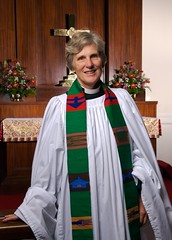
A Bible Study on the Role of Women as Pastors

From the Institute-of-Lutheran-Theology

By Kip Allan Tyler

Throughout the history of God’s people men and women have been called by God to serve God and His people faithfully. This has happened in various ways as demonstrated in Holy Scripture. We are going to take a journey through God’s Word, so please take out your Greek New Testaments.First of all we need to understand, the term ‘pastor’ does not appear in the Bible. The etymology of this word is traced through Latin and not Greek. The Latin word for “pastor” means a herder of a flock and the verb pascere means “to feed.”

The closest koine Greek word would be found in 1 Peter 5:1-2 where the πρεσβυτέρους (Adjective Accusative Plural Masculine πρεσβύτερος) “elder” is to ποιμάνατε (Verb 2nd Person Plural Aorist Active Imperative ποιμαίνω) “shepherd, feed, tend” the flock of God among them.

Although the term pastor is not mentioned in the New Testament it is common among us today. The role of a pastor is really an amalgamation of numerous Old Testament and New Testament functions, such as priest, servant, overseer, prophet, teacher, etc.

The challenge in this study is to not only look at the passages from the Bible which have been used by some to deny the possibility of women serving as pastors, but also attempt to understand the role of women throughout Scripture and reconcile the seeming Biblical tension.

A verse often cited to argue against a woman serving as a pastor is 1 Timothy 2:11-12 which is translated in the NIV as “A woman should learn in quietness and full submission. I do not permit a woman to teach or to have authority over a man; she must be silent.” Paul is writing to Timothy giving him advice as he provides leadership for the church in Ephesus which is being influenced by false teachers.  (cont.)

 The full Bible Study: The-Role-of-Women-as-Pastors


_______________________________________________________________


“Overall, I am not too crazy about women pastors in the church. Although, I have met some very good ones.”

That statement alone, has gotten me literally booted off some blogs by LCMS bloggers, with whom I was previously quite friendly. A couple of them (they will remain nameless) will no longer even speak to me.

I have also been booted off blogs by ELCA bloggers, as well (not on this topic), just to be fair.

This can be a great discussion if we can keep from getting emotional.  Please read the entire Bible study before commenting pro or con.

I’m going out to the desert to visit my Mom later today (at least a five hour roundtrip) so I won’t be able to participate until later tomorrow.

This can be a heated topic, so I’m asking all that would like to participate to keep the discussion civilNo name calling, please.

Remember, like Dennis Prager, I prefer “clarity, rather than agreement.”

We probably aren’t going to win anybody over, here. But we can make some good arguments and hopefully learn a thing or two ourselves.